Dear Readers,
I hope you are doing well.
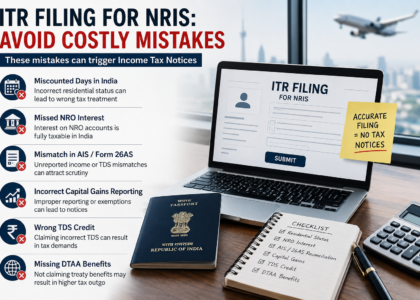
A recent ruling by the Bangalore ITAT in the case of Pradeep Narasimhan provides important clarity on tax residency and applicability of tie-breaker provisions under the India-Kazakhstan DTAA.
The Tribunal deleted the addition of Rs. 71.60 lakhs made towards salary income for an overlapping employment period, holding that the assessee had closer personal and economic ties with Kazakhstan and therefore qualified as a tax resident of Kazakhstan under Article 4(2) of the DTAA.
The ITAT further clarified that the Income Tax Act does not provide for split residential status for a part of the previous year. It also observed that where dual residency arises under domestic laws, treaty tie-breaker provisions become crucial for determining the correct State of residence and allocation of taxing rights.
The ruling highlights the importance of maintaining proper employment, residential and payroll records for taxpayers working across multiple jurisdictions to substantiate treaty residency claims and avoid unnecessary tax disputes.
Warm regards,
Samir Mahajan
ITAT Bangalore: Tie-Breaker under India-Kazakhstan DTAA Applies; Salary for Overlapping Employment Period Not Taxable in India
In a significant ruling on treaty residency and cross-border employment taxation, the Bangalore Bench of the Income Tax Appellate Tribunal (ITAT) in the case of Pradeep Narasimhan deleted the addition of Rs. 71.60 lakhs made towards salary income earned during an overlapping employment period, holding that the assessee was a tax resident of Kazakhstan under Article 4(2) of the India-Kazakhstan DTAA.
The assessee, a New Zealand national, was initially on assignment in India and subsequently moved to Kazakhstan for employment purposes. The Revenue sought to tax salary income relating to the overlapping period by treating the assessee as resident in India. However, the Tribunal observed that the assessee was residing in Kazakhstan, had shifted his payroll there, and did not maintain a permanent home in India during the relevant period.
The ITAT emphasized that the Income Tax Act does not provide for split residential status for a part of the previous year. In situations where a taxpayer qualifies as resident in both countries under domestic tax laws, the tie-breaker provisions under the DTAA become essential for determining the State of residence for treaty purposes.
Applying Article 4(2)(a) and (b) of the DTAA, the Tribunal held that the assessee had closer personal and economic relations with Kazakhstan and therefore qualified as a tax resident of Kazakhstan. Accordingly, the salary earned during the overlapping period could not be taxed in India.
The Tribunal further observed that the Revenue had also failed to establish taxation under Article 15(2) of the DTAA. Consequently, the addition made by the Assessing Officer was deleted.
Conclusion
The ruling reiterates the importance of DTAA tie-breaker provisions in determining tax residency in cross-border employment situations. It also clarifies that residential status under the Income Tax Act cannot be split for different parts of the same previous year. Taxpayers working across multiple jurisdictions should maintain proper residential, payroll and employment records to effectively substantiate treaty residency claims and avoid unnecessary litigation.